
Bwindi protects one of Africa's oldest and most biologically diverse forests. This UNESCO World Heritage site covers 321 square kilometres of steep terrain, draped in mist and ancient vegetation. The forest's name reflects its density, with a canopy so thick that sunlight barely reaches the forest floor. It is home to roughly half of the world's remaining mountain gorillas.
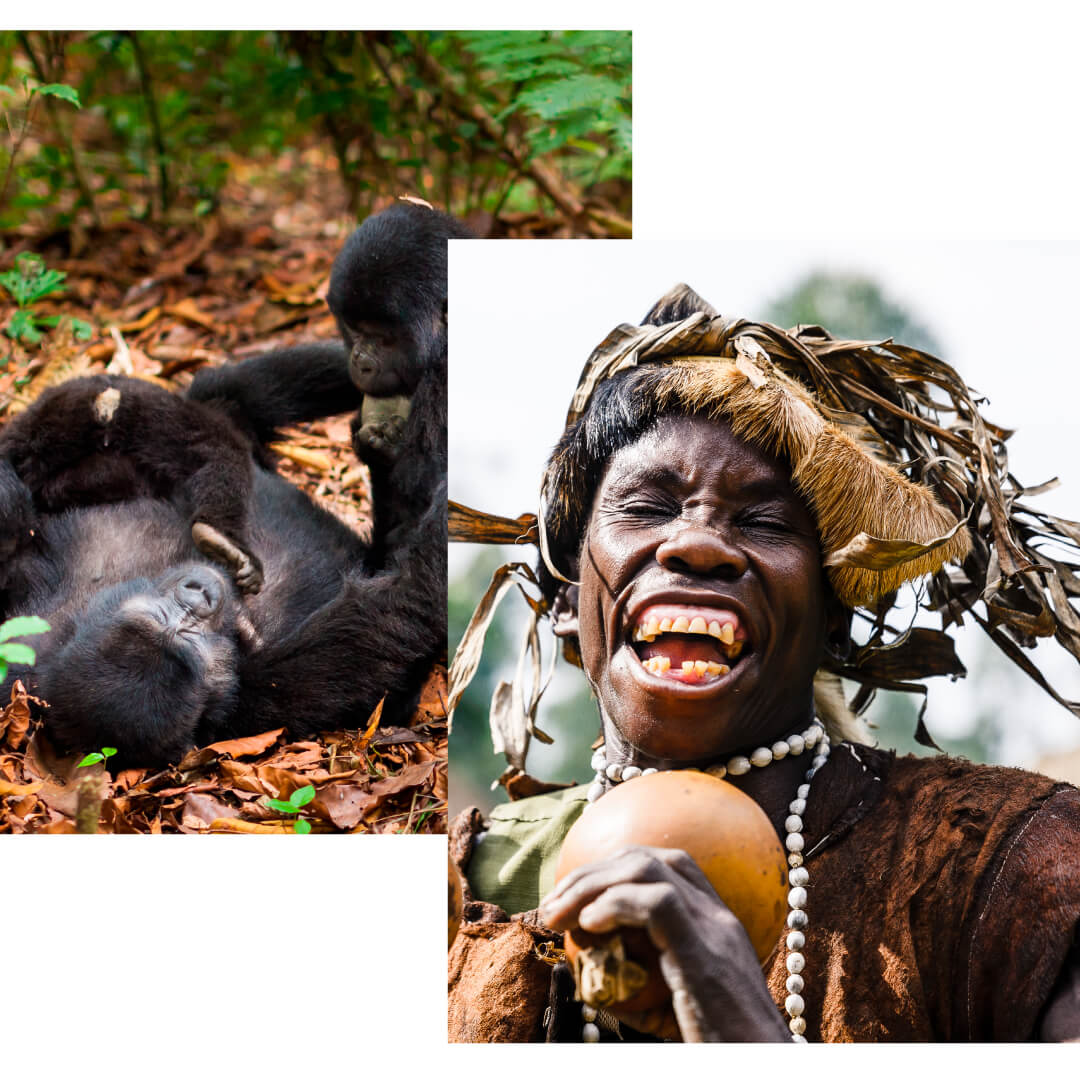
Bwindi's vegetation is exceptional in its diversity. The forest spans altitudes from 1,160 to 2,607 metres, creating a range of habitats from lowland forest to montane woodland. Over 200 tree species have been recorded, including the giant afrocarpus and mahogany. The understorey is thick with ferns, mosses, and orchids, while bamboo patches grow at higher elevations. The vegetation varies dramatically across the park, with different sectors holding distinct plant communities.
The park's primate population is extraordinary. In addition to the gorillas, Bwindi supports 11 other primate species including chimpanzees, L'Hoest's monkeys, and black-and-white colobus. Forest elephants, smaller than their savannah relatives, move through the undergrowth. Duikers, bush pigs, and giant forest hogs are common. Leopards and African golden cats also inhabit the forest. The park holds over 350 bird species, with 23 Albertine Rift endemics, including the African green broadbill and the Ruwenzori turaco.
Bwindi also supports a remarkable diversity of butterflies and moths. The forest's age and isolation have led to high levels of endemism, making it one of Africa's most important conservation areas. The Batwa people, the forest's original inhabitants, lived here for thousands of years, and their knowledge of the forest is deeply integrated with its ecology.
Gorilla tracking is Bwindi's defining experience. The encounter with a gorilla family in this dense forest is one of the world's most profound wildlife experiences. The trek through the steep, misty terrain is challenging, yet each step builds anticipation for the moment when you first see the gorillas.
The tracking experience is carefully managed. You assemble at the park headquarters for a briefing, then set off with rangers and trackers. The trail can be muddy, steep, and slippery. Your guides clear a path through the undergrowth. The trek may take hours. When you finally locate the gorilla family, you have one hour to observe them in their natural habitat.
Watching a silverback protect his group is unforgettable. You see mothers nursing their young, playful juveniles tumbling through the vegetation, and the quiet bonds of grooming sessions. The gorillas are relaxed, accustomed to human presence. The moment is deeply moving, offering a connection to these intelligent, gentle creatures.
The number of permits is limited, ensuring minimal disturbance. The experience is available in four sectors of the park, each offering different terrain. The Buhoma sector is the most accessible, while Rushaga offers the largest number of habituated families. Each sector provides a unique experience, with the rugged beauty of Bwindi providing a spectacular backdrop. Gorilla tracking in Bwindi is not merely a wildlife sighting.